
Table of Contents
Looking for a reliable IPTV alternative to Cable in 2026 is not really about finding the service with the biggest channel number, the cheapest annual price, or the loudest “4K” claim. The real challenge is replacing a television setup that your household already understands. Cable may be expensive and restrictive, but it is familiar: the remote works, the guide is organized, live channels are easy to find, and everyone knows what to do when they want to watch television. If an internet-based service saves money but turns every evening into a search through confusing playlists, buffering tests, and app settings, it has not truly replaced cable.
A better way to judge a reliable IPTV alternative to Cable is to ask whether it can reproduce the parts of cable you actually value while improving the parts you dislike. That may mean keeping your favorite sports and news, gaining access to more international channels, removing equipment rental, watching on more devices, or paying for a shorter and more flexible subscription. The goal is not to copy cable channel for channel. The goal is to build a television setup that works better for the way your household watches in 2026.
The Decision First: Is IPTV Actually a Better Cable Replacement?
For many households, IPTV can be a practical replacement for traditional television, but it is not automatically the better choice. A reliable IPTV alternative to Cable makes the most sense when the viewer values flexibility, broad channel access, international programming, sports, movies, and the ability to use different streaming devices. It becomes less attractive when the household depends on a very specific local-channel package, expects provider-managed hardware in every room, or wants one company to handle television support from end to end.
The decision should therefore begin with your current habits rather than with a provider’s sales page. Write down the channels, sports, events, regions, and devices that matter in your home. Then compare those needs against the provider’s current IPTV channel list. If the content is there, check how your preferred device is supported through the installation guide. Only after that should you use the IPTV free trial when available and compare the current subscription pricing. This order matters because a reliable IPTV alternative to Cable should earn the right to replace your existing setup before price becomes the deciding factor.
Who Usually Benefits Most From Leaving Cable?
The strongest candidates are households that feel they are paying too much for a package they barely use. If your bill includes equipment fees, bundles, premium add-ons, or hundreds of channels that never get opened, moving to an internet-based setup can give you more control. A reliable IPTV alternative to Cable can also appeal to people who move between rooms, use several types of screens, or want television on a Fire TV, Android TV, Google TV, Smart TV, Apple TV, tablet, phone, or computer rather than on one provider box.
Multilingual households can have an even stronger reason to switch. Traditional packages often organize international content into separate add-ons, while IPTV-style services may place many countries and regions inside one larger catalog. That can be useful for families following entertainment, news, and sports from the United States, UK, Canada, France, Germany, Spain, Latin America, the Middle East, or other regions. In that situation, a reliable IPTV alternative to Cable is valuable not merely because it costs less, but because it can better match the household’s actual viewing identity.
Who May Be Better Off Keeping Cable?
Leaving cable is not a win for everyone. A viewer who mainly watches a few local stations, relies heavily on a specific regional sports network, uses an operator-provided DVR every day, or prefers calling one established support department may find that traditional television still fits better. Cable can also remain attractive in homes where the internet connection is inconsistent, because moving all live television onto the same connection increases the importance of network stability.
That does not mean IPTV is unsuitable in those homes, but the standard for a reliable IPTV alternative to Cable has to be higher. When the goal is a reliable IPTV alternative to Cable, convenience cannot be treated as optional. The replacement should be tested during normal evening use, on the actual television, with the actual household network, and during the exact events that matter. If a family member watches one local evening newscast every day, that single channel may matter more than thousands of channels elsewhere. Replacing cable successfully is about removing compromises, not simply moving them to a different platform.
The Household Test: What Must Your Replacement Actually Cover?
Before comparing providers, make a simple household viewing map. Do not ask everyone which channels they “like,” because people usually name far more than they actually watch. Instead, track what gets opened over several normal days. Include morning news, children’s programming, evening entertainment, sports, weekend events, movies, international channels, and anything watched by older family members who may prefer a familiar guide. This gives you a realistic definition of a reliable IPTV alternative to Cable instead of a vague wish list.
Build a Must-Have List, Not a Giant Wish List
Separate content into three groups: essential, useful, and optional. Essential means you would seriously reconsider switching if it disappeared. Useful means you watch it often but could live without it. Optional means it looks nice on a channel list but would not affect the decision. Once the list is clear, search the provider’s channel lineup for the essential group first. This simple exercise prevents channel-count marketing from controlling the decision and makes it easier to determine whether a reliable IPTV alternative to Cable fits your household rather than somebody else’s.
- Essential: the channels, leagues, news sources, or regional content your household actively depends on.
- Useful: content you enjoy regularly but could replace with another channel or streaming source.
- Optional: channels that add variety but would not influence whether you cancel cable.
Reliability Matters More Than Channel Count
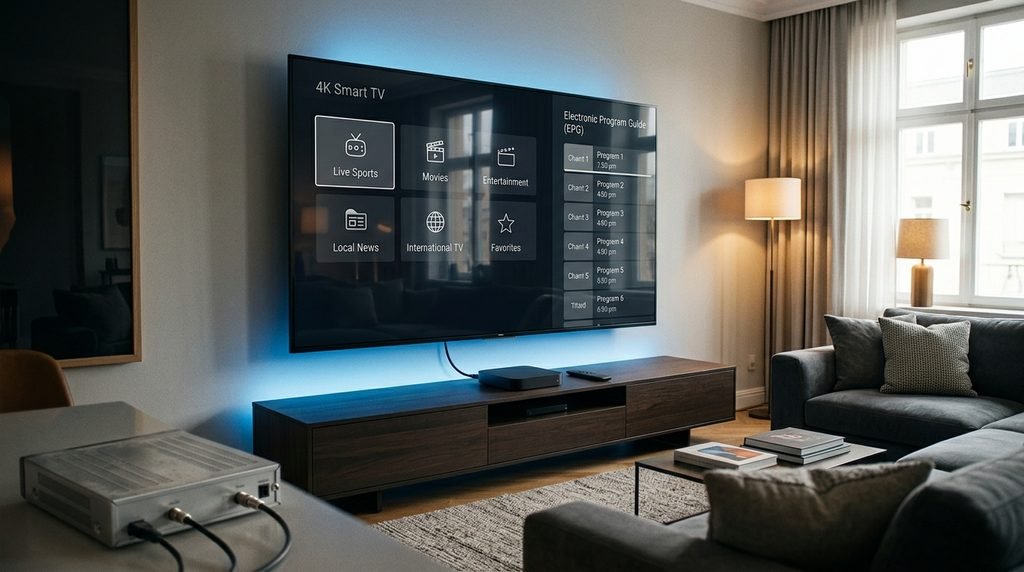
A huge playlist is easy to advertise because the number looks impressive. It tells you almost nothing about how good the service feels at 8:30 p.m. when several people are online and you want to watch one specific live channel without interruptions. A reliable IPTV alternative to Cable should be judged by stream consistency, channel loading time, how often important feeds disappear, whether the guide stays useful, and how the service performs during busy viewing periods.
Duplicate entries, inactive feeds, low-interest regional channels, and multiple versions of the same station can inflate a catalog without making television better. The practical question is whether the 20, 30, or 50 channels you actually use behave consistently. If they do, a smaller usable favorites list can feel far better than a gigantic unorganized package. If they do not, the total channel count becomes irrelevant. This is one of the biggest differences between shopping for a reliable IPTV alternative to Cable and shopping for a cable package with a fixed published lineup.
What “Reliable” Should Mean During a Trial
Reliability is not the same as one successful five-minute test. Anyone comparing a reliable IPTV alternative to Cable should treat the trial as a stress test, not a demo. Use the service for longer sessions and switch between different categories. Watch a news channel for half an hour, open an HD stream, try a movie channel, test a live sports feed when possible, and return to the same favorites later. A reliable IPTV alternative to Cable should continue to feel stable after the novelty of the first login is gone. The point of a trial is to discover weaknesses before your old television service is cancelled.
Sports, Local Channels, and Live Events Need Separate Testing
Sports deserve their own evaluation because broadcasting rights, regions, and schedules make live coverage more complicated than ordinary entertainment. A generic “sports included” label is not enough. Someone following NFL, NBA, MLB, NHL, college sports, Premier League, Champions League, Bundesliga, Ligue 1, La Liga, Formula 1, UFC, boxing, cricket, or rugby has a very specific set of expectations. A reliable IPTV alternative to Cable should be tested against those expectations rather than against a generic sports category.
Local channels deserve the same attention. A reliable IPTV alternative to Cable should be checked against the exact local stations that matter in your area. If your household relies on local news, weather, regional events, or a specific network affiliate, verify that exact content before cancelling anything. Some viewers discover after switching that they cared about local television more than they expected. Others realize they barely watched it at all. A reliable IPTV alternative to Cable does not need to imitate every part of cable, but it does need a clear answer for the parts you would genuinely miss.
Your Device Can Make or Break the Experience
The television service and the television interface are not the same thing. IPTV provides access to streams, while the player and device determine much of what you touch every day: search, favorites, categories, EPG layout, channel switching, parental controls, and playlist organization. A reliable IPTV alternative to Cable can feel excellent on a responsive streaming box and frustrating on an old Smart TV with limited memory and a slow application.
Before paying for a long plan, use the installation guide to confirm the setup for your intended device. Fire TV, Android TV, Google TV, NVIDIA Shield, Samsung Smart TV, LG WebOS, Apple TV, smartphones, tablets, and computers all have different app ecosystems. A reliable IPTV alternative to Cable should feel natural on the device you intend to use every day. The best device is not necessarily the most expensive one; it is the one that makes your normal viewing simple. For a living-room replacement, a reliable IPTV alternative to Cable should be easy enough that other people in the household can use it without learning a technical workflow.
The EPG Is More Important Than It Looks
When evaluating a reliable IPTV alternative to Cable, an electronic program guide may seem like a secondary feature when you first explore a large channel catalog, but it becomes much more important after a few weeks. Cable trained viewers to open a guide, see what is playing, and move quickly between familiar channels. If the IPTV setup forces you to browse endless categories every night, the flexibility becomes tiring. A reliable IPTV alternative to Cable should let you create favorites, search quickly, and use available EPG information so the service gradually becomes easier rather than more complicated.
Internet and Home Network Requirements
Moving from traditional cable delivery to IPTV transfers more responsibility to your internet connection and home network. Raw broadband speed matters, but consistency matters just as much. A fast plan can still produce poor streaming if Wi-Fi is weak in the living room, the router is overloaded, interference is heavy, or an old streaming device struggles with high-quality video. A reliable IPTV alternative to Cable depends on the full path from the provider to the player, not just on the subscription itself.
If buffering appears, compare several conditions before blaming one cause. This is especially important when judging a reliable IPTV alternative to Cable because the provider is only one part of the streaming chain. Try another IPTV channel, then test a mainstream video service on the same device. If everything struggles, the home network or internet connection may be involved. If other services remain stable while several IPTV channels repeatedly freeze, the provider or stream becomes a stronger suspect. Ethernet is especially useful during testing because it removes many Wi-Fi variables. A reliable IPTV alternative to Cable should perform predictably on the strongest practical connection available in your home.
What a Cable Replacement Really Costs
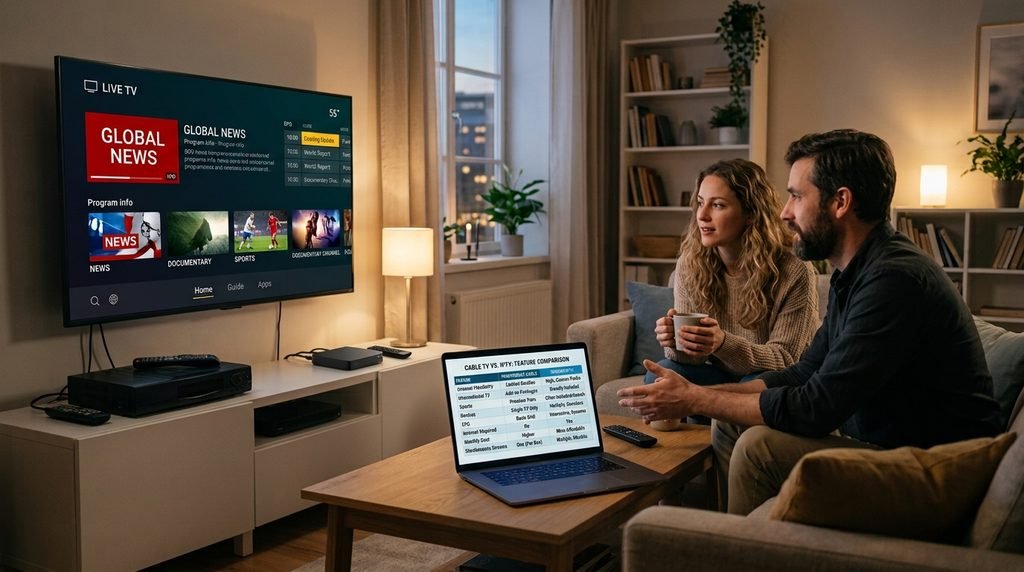
Comparing only the advertised subscription price can make any internet service look dramatically cheaper than cable, but the real comparison is broader. The total value of a reliable IPTV alternative to Cable depends on the complete setup, not one promotional number. Consider whether you need a new streaming device, stronger Wi-Fi coverage, extra simultaneous connections, or separate subscriptions for content that is not included. Then compare that total with the television portion of your cable bill, including equipment fees and add-ons. A reliable IPTV alternative to Cable should save money or deliver enough additional value to justify the change.
Pricing should also reflect confidence. A reliable IPTV alternative to Cable should not require a long commitment before it has earned your trust. If you are evaluating Xtreme HD IPTV, it is smarter to use the IPTV free trial before making the pricing page the center of your decision. A cheap 12-month commitment is not a bargain if the service does not work well with your device or favorite channels. After the trial, a shorter plan can give you more time to observe weekends, evening traffic, app behavior, and important events before you decide whether a longer commitment makes sense.
| Decision Factor | Traditional Cable | IPTV-Style Service | Mainstream Live-TV Streaming |
|---|---|---|---|
| Hardware | Often provider-managed boxes | Usually your own compatible device | Usually your own streaming device |
| International content | Often package or add-on based | Can be a major strength | Usually more region-focused |
| Guide experience | Generally standardized | Depends heavily on player and EPG | Usually built into the native app |
| Internet dependence | Lower for traditional TV delivery | High | High |
| Subscription flexibility | Varies by provider | Often several plan lengths | Usually monthly |
| Setup responsibility | Mostly provider-managed | More user-controlled | Usually simple app setup |
Three Real-World Switching Scenarios
Scenario 1: The Sports-First Household
When searching for a reliable IPTV alternative to Cable, imagine a household that keeps cable mainly for football, basketball, combat sports, and several sports networks. Movies are already covered by other apps, and most entertainment channels are rarely used. For this home, a reliable IPTV alternative to Cable succeeds only if sports feeds remain stable during the events that matter. The trial should be used during an actual game or busy sports evening whenever possible, not at 10 a.m. on a random weekday. If the sports experience works and the remaining must-have channels are present, the household may have a strong reason to switch.
Scenario 2: The Multilingual Family
For another reliable IPTV alternative to Cable use case, a family may watch American entertainment, European football, French news, Arabic channels, and children’s programming from several regions. Cable can become expensive or fragmented when each international package is treated as an add-on. In this case, a reliable IPTV alternative to Cable can create value through breadth and convenience rather than through price alone. The family should build favorites by person or region and make sure the player does not become overwhelming. A large catalog is an advantage only when everyone can reach the content they want quickly.
Scenario 3: The Simplicity-First Viewer
A third reliable IPTV alternative to Cable scenario is a viewer who may watch local news, a handful of national networks, and one or two weekly programs. That person may not care about thousands of international channels or device flexibility. A reliable IPTV alternative to Cable could still work, but the benefit may be smaller because the traditional package already matches the viewing pattern reasonably well. Mainstream live-TV streaming may even be a better middle ground if it provides the desired channels with a familiar native application and little setup. The best replacement is the one that removes friction, not the one with the longest feature list.
How to Test IPTV Before Cancelling Cable
A proper trial should imitate normal household use. The purpose is to find out whether a reliable IPTV alternative to Cable works under ordinary conditions rather than ideal ones. Do not spend the entire trial browsing random channels just because the catalog is new. Start with your essential list, then test the times and devices that matter. If you normally watch television after dinner, test after dinner. If the family uses two televisions, test the expected viewing pattern. If sports are the reason you still have cable, test sports. A reliable IPTV alternative to Cable has to survive your real routine rather than an ideal laboratory condition.
- Confirm content first. Search the current channel list for must-have channels, sports, countries, and categories.
- Prepare the exact device you plan to keep. Follow the installation instructions instead of testing on a temporary device you will not normally use.
- Use the trial during normal viewing hours. The IPTV free trial is most useful when it reproduces real evening and weekend conditions.
- Test navigation, not just picture quality. Search, favorites, EPG behavior, categories, and channel switching will matter every day.
- Compare Wi-Fi and Ethernet when possible. This helps separate provider problems from home-network problems.
- Review pricing last. Once the setup proves itself, compare the available subscription options based on the amount of commitment you are comfortable making.
This approach makes the test much more useful because it prevents excitement from replacing judgment. A reliable IPTV alternative to Cable should still look attractive after you have deliberately searched for its weaknesses. If a problem appears during the trial, solve it before cancelling cable. That may mean changing the player, improving Wi-Fi, trying Ethernet, reorganizing favorites, or deciding that one missing channel is important enough to keep another service.
IPTV vs Cable vs Mainstream Live-TV Streaming
When comparing a reliable IPTV alternative to Cable with other options, traditional cable is strongest when the viewer wants a standardized, provider-managed experience. Mainstream live-TV streaming is strongest when someone wants a cable-like interface without a traditional cable box. IPTV-style services can be strongest when the priority is broader content, international television, flexible devices, and more control over the setup. A reliable IPTV alternative to Cable sits in the third category, but whether that category is “best” depends entirely on the household.
It is also useful to remember that “IPTV” describes television delivered using internet protocol technologies rather than one single kind of company or package. Readers who want the broader background can review the general concept of television and internet-delivered viewing, but the buying decision is much simpler: choose the model that gives you the content, usability, reliability, and support level you actually need. A reliable IPTV alternative to Cable wins only when the total experience is better for you, not because one delivery technology is automatically superior.
Common Cable-Replacement Mistakes
The biggest mistake is cancelling cable before testing the replacement properly. A reliable IPTV alternative to Cable should be proven before the old service disappears. The second mistake is treating the advertised channel count as proof of value. Another common problem is buying the longest plan immediately because the monthly equivalent looks cheaper, even though the service has not yet been tested across real evenings, sports events, device updates, or family use. A reliable IPTV alternative to Cable should reduce risk during the transition rather than encouraging you to commit before you know what you are buying.
People also make the opposite mistake: they blame every buffering event on the provider. Streaming depends on more moving parts than a traditional cable box, including Wi-Fi quality, router placement, broadband stability, the player, and the streaming device. Finally, many households ignore usability. A technically working service is not enough if parents, children, or less technical family members cannot find what they want. A reliable IPTV alternative to Cable should become more familiar after a week, not more frustrating.
Five Warning Signs to Take Seriously
- Important channels repeatedly fail while less important channels work.
- The service performs well only at unusual times but struggles during your normal viewing hours.
- The player or device is so slow that finding a channel becomes annoying.
- Your must-have sports or local content cannot be confirmed clearly.
- You feel pressured to buy a long plan before you have completed a realistic test.
Final Switching Checklist
Before you cancel traditional television, review the entire replacement as one system. Think of a reliable IPTV alternative to Cable as a complete viewing setup rather than a single subscription. A reliable IPTV alternative to Cable is not just the provider; it is the combination of content, player, device, internet, home network, household habits, and subscription choice. If one of those pieces is weak, fix it before cutting off the old service. The transition is much easier when you overlap the two setups briefly instead of cancelling first and troubleshooting later.
- Your essential channels and sports have been identified and checked.
- Your main television or streaming device has been configured successfully.
- Favorites, search, and available EPG information are easy enough for daily use.
- You have tested during normal evening or weekend viewing hours.
- Wi-Fi is stable, or Ethernet has been tested where practical.
- Other people in the household can use the setup without constant help.
- You understand the total cost, not just the headline subscription price.
- You have chosen a plan length based on confidence rather than discount pressure.
Frequently Asked Questions
Can a reliable IPTV alternative to Cable completely replace traditional television?
For many viewers, yes, but “completely” depends on the household. If your must-have channels, sports, local content, device support, and everyday navigation all work well, the replacement can cover the role cable used to play. If one essential regional station, sports network, or feature is missing, you may need a second service or may decide not to switch. The safest approach is to test the full routine before cancelling anything.
Is IPTV always cheaper than cable?
No. A reliable IPTV alternative to Cable can be significantly less expensive in some situations, but the correct comparison includes the subscription, streaming hardware, internet requirements, extra connections, and any additional services you still keep. The lowest advertised price is not automatically the lowest total household cost, and saving money is not useful if the replacement performs poorly.
What device is best for replacing cable with IPTV?
There is no universal best device because app availability and household preferences differ. Fire TV, Android TV, Google TV, NVIDIA Shield, Apple TV, compatible Smart TVs, computers, phones, and tablets can all be used in different setups. A reliable IPTV alternative to Cable should run on a device that feels fast, has a suitable player, supports easy navigation, and can stay connected reliably in the room where you watch most often.
Do I need Ethernet, or is Wi-Fi enough?
Good Wi-Fi can be enough, especially when the router is close and the network is not congested. Ethernet is useful because it removes many wireless variables and provides a strong baseline when troubleshooting. If a reliable IPTV alternative to Cable works well through Ethernet but repeatedly buffers on Wi-Fi, improving the home network may solve the issue without changing the television service.
Should I buy a 12-month plan after one successful test?
Not necessarily. A reliable IPTV alternative to Cable should prove itself across different days, viewing hours, and content types. A free trial can reveal obvious problems, but a shorter paid period can provide additional confidence before a long commitment. The right plan length is the one that matches how certain you are about the service, not simply the one with the lowest monthly equivalent.
What matters more: channel count or stream quality?
Stream quality and availability matter more for normal viewing. That is especially true when choosing a reliable IPTV alternative to Cable for everyday use. Twenty thousand channels sound impressive, but most households repeatedly use a much smaller favorites list. A reliable IPTV alternative to Cable should deliver the channels you care about consistently, load them quickly, and make them easy to find. Thousands of unused or unreliable entries do not improve the experience.
Can IPTV work for a family that watches content from several countries?
That is one of the situations where a reliable IPTV alternative to Cable may be especially attractive. A broad catalog can make it easier to combine entertainment, news, and sports from several regions in one setup. The important step is organizing favorites and confirming the specific countries and channels the family actually uses, because a large international catalog is only valuable when the desired content is included and easy to reach.
Final Verdict: What Makes an IPTV Cable Replacement Worth It in 2026?
A reliable IPTV alternative to Cable is worth switching to when it improves the parts of television that matter to your household without creating bigger problems elsewhere. That means stable access to your essential content, a responsive device, a usable player, sensible navigation, dependable internet performance, and a subscription commitment that matches your confidence. Price matters, but it should be the final comparison rather than the first filter.
Start with the household instead of the provider. That is the simplest way to judge a reliable IPTV alternative to Cable without being distracted by marketing. Identify what people actually watch, search the current channel list, prepare the intended device through the installation guide, and use the IPTV free trial when available. Test the service during real viewing conditions, including sports, evening television, EPG navigation, HD or available 4K streams, Wi-Fi or Ethernet, and the way multiple people use the home network.
If the setup continues to work after you stop exploring and start using it like normal television, then compare the current pricing plans and choose the commitment that makes sense. That is the real standard for a reliable IPTV alternative to Cable in 2026: not the most channels, not the biggest promises, and not the cheapest annual number, but a service you can use every day without constantly wishing you had kept the old cable box.
Ready to start streaming?
Choose a subscription and get your Xtreme HD IPTV access from the official pricing page.
Live TV • VOD • Sports • EPG • Multi-device options